Practical guidanceThis article provides general information. Customs, tax, marketplace and carrier requirements can change; verify the rules that apply to your goods and transaction.
What data moves through an integration?
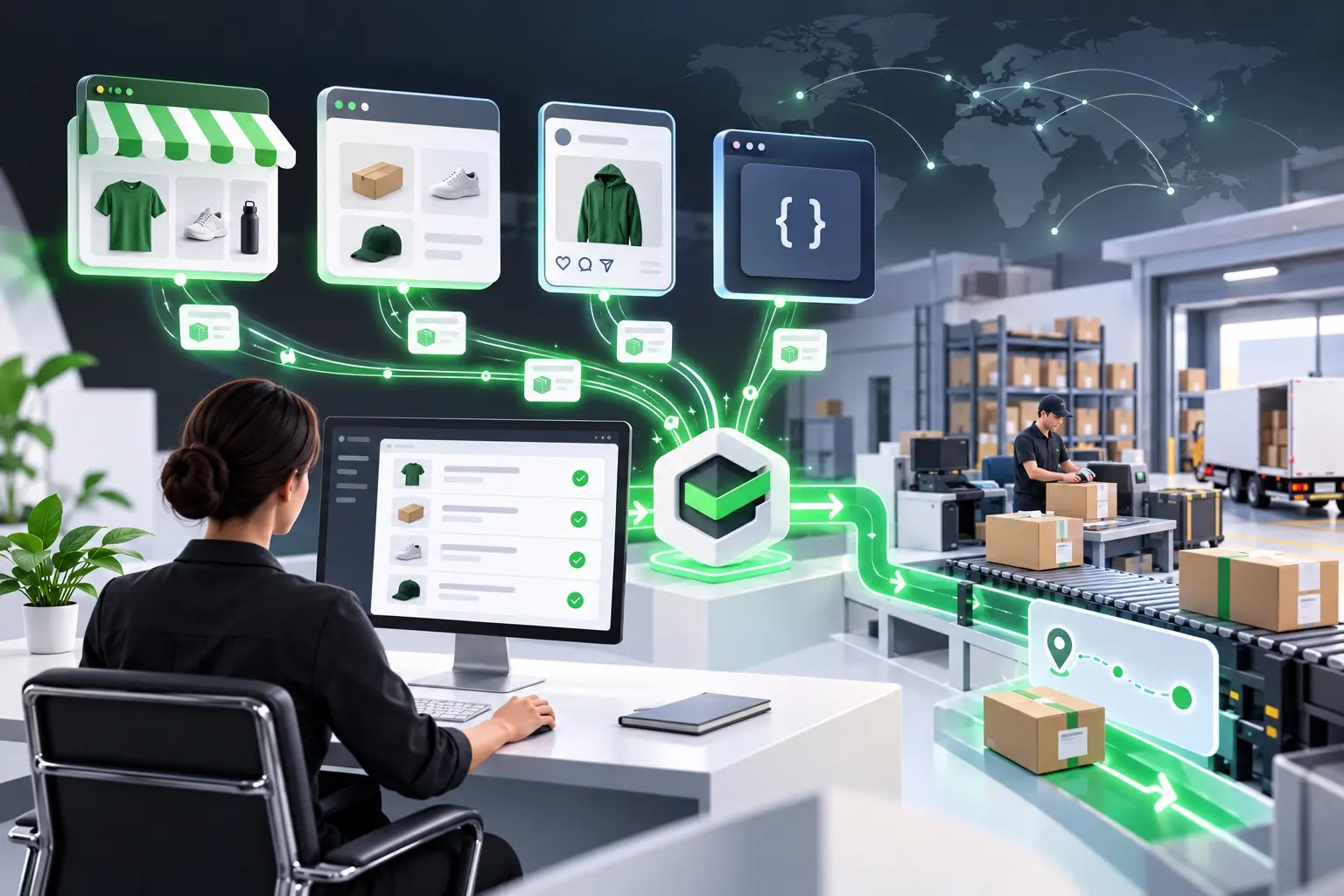
A typical connection sends orders, customer delivery details, SKUs, quantities and selected shipping services into the fulfilment platform. After processing, status, tracking and sometimes inventory information flow back to the sales channel.
The exact fields vary by platform and workflow. International orders can also need product descriptions, values, origin and commodity codes.
Benefits of connected fulfilment
Removing manual re-entry reduces delays and typing errors. Centralised stock updates can also reduce overselling when several channels draw from one inventory pool.
Useful integrations make exceptions visible rather than hiding them. Invalid addresses, unknown SKUs, held orders and failed updates need clear queues and ownership.
- Faster order release
- Consistent SKU and address data
- Automatic tracking updates
- Shared inventory visibility
- Clear exception management
Platform connectors and custom APIs
Established connectors can support platforms such as Shopify, WooCommerce, Amazon, eBay and TikTok Shop. A custom API is useful when a merchant has a bespoke store, ERP, marketplace or workflow that standard connectors do not cover.
API projects should define authentication, field mappings, status rules, retry behaviour, rate limits, security, monitoring and support before development starts.
Testing before launch
Use test orders covering single items, multiple lines, discounts, cancellations, address formats, international destinations and returns. Confirm both the warehouse action and the update returned to the channel.
Keep a rollback and manual-contingency process. Even reliable integrations can be affected by platform changes, expired credentials or incomplete product data.
Useful parcel websites
Continue with the service that best matches what you need to do next.
Frequently asked questions
Does an integration update tracking automatically?+
It can when the connector and workflow are configured to send shipment data back to the channel.
What is a custom fulfilment API?+
It is a documented connection that lets a bespoke system exchange orders, inventory or shipment data with the fulfilment platform.
Can several stores connect to one account?+
Often yes, with appropriate channel mapping and inventory rules.
What causes integration failures?+
Common causes include invalid credentials, unmapped SKUs, incomplete addresses, rate limits and changed platform requirements.